
Whoops : 4.1 cm dilatation of the ascending thoracic aorta


(Hugh Walter Jennings) #1

Yep, annual CT scan of my lungs came back fine but I have a 4.1 cm dilatation of the ascending thoracic aorta. Aneurysm territory.

Notes from the doctor that reviewed the CT scan recommended continued annual CT scan. So I guess if it was urgent he would have said something besides that.

Now I have to see if ketosis is compatible with that condition. Time to go down another rabbit hole I suppose.

I did look into the treatment for the condition and one of them was keeping blood pressure in check. Mine flirts with the elevated range at times so I restarted my 10 mg amlodipine yesterday along with my hawthorn berry extract.

Average of three reads this morning was 112 over 80.

LDL appears to be an issue. My last lipid panel showed my LDL at the upper end of the normal range. Chol/ LDL ratio is 2.7 and all other categories are in the normal range.

I restarted my rosuvastatin 5mg anyhow.

Anyone familiar with ketosis and dilatation of the ascending thoracic aorta ? After a brief search I got conflicting answers. A couple said a high fat diet is a no no and some claim healthy fats are fine but restrict saturated fat.

This morning I said the heck with it and ate a 1/4 lb serving of 93 % lean grass fed/finished ground beef. Only 3.5 grams of saturated fat out of eight grams total.

One other thing I read is that I shouldn’t be lifting anything over 30 lb. Been doing heavier weight than that at the gym. Might be what caused the dialation. I’ll switch to high rep / low weight moving forward. Not doing it for aesthetics anyhow, just age-related muscle loss prevention.


(Joey) #2

Sorry, no useful info to share on that specific topic. But I can attest that a meaningfully low-carb diet has kept my wife’s (and my) blood pressure nice and low. In fact, our internist took her off of blood pressure meds entirely after she cut out the carbs.

He also took her off of her statin when she went low carb. He understood that most of the lab reference ranges and ā€œcauses for alarmā€ produced from lipid panels are simply not relevant to someone who refrains from eating carbs.

Do you have any symptoms of concern? What has motivated the CT scans in the first place?

Hope you get on top of those issues. Sounds like you’re doing the legwork to learn what you can and avoid what’s not relevant. I believe it’s important that we choose our own rabbit holes. :vulcan_salute:


(Hugh Walter Jennings) #3

Hi Joey, the annual CT scan of my lungs is just due to my history of smoking. They found a nodule the first time on one of my lungs but it is never increased in size over several years and has been labeled benign. The good doctor I had told me that here in the Ohio valley there’s some kind of fungus and it’s not uncommon for people that have never smoked to have the same type of nodule.

It just so happens to show images of the heart and vascular system in the chest as well.

I looked up symptoms and I have none of them. Back pain, coughing, chest pain, etc.

Since I posted I did search around and the size of the dilation is considered moderately lower risk for rupture.

I also had a abdominal aortic aneurysm scan a couple years ago because of my smoking history and it came back negative.

Either way any type of aortic aneurysm that ruptures, 90% of patients die before they get to the hospital. So I’m going to be very diligent in doing all I can for myself and not worry about it.


(Joey) #4

Excellent to know what you know. Sounds like you’re getting solid expert input to inform your best moves. Onward!


(Bob M) #5

That’s the normal idea that saturated fat = bad. The main reasoning behind this is that saturated fat = increased LDL = increased ā€œheart diseaseā€ risk.

My guess is that there is a zero percent chance saturated fat has anything to do with a dilated aorta.

And let’s say that saturated fat means higher LDL. There are so many other improvements when you go on a lower carb/keto diet that far outweigh any increase in LDL. Decreases in A1c, HS-CRP, liver enzymes, trigs, etc. are common, while increases in HDL, etc. are also common.

But it’s way more complex than that, as illustrated by this Virta Health study:

They found that comparisons between a group that was keto and a group that was not, there were no significant changes in LDL or CIMT (one measure of heart disease) at 2 years. But if you start getting into LDL and HDL sizes, in general, the keto group ā€œimprovedā€ more there, in the sense that they moved toward larger LDL and better HDL sizes.


(Joey) #6

:+1: Couldn’t agree more. Probably less than zero.

(Hugh Walter Jennings) #7

@ctviggen

Hi Bob, I’m convinced my heavy strength training is the likely cause of the dialation. Occasionally I’ll catch myself holding my breath instead of breathing correctly when I lift.

Anyhow, a 4.1 cm dialation is considered moderately low risk for rupture. My recent lipid panel showed my LDL in the high normal range. So I’m not worried about that.

As far as saturated fat, I’m doing an experiment today with mct oil which is all saturated fat.

An hour ago my blood ketones had dropped to .4 mmol/ L. Too many carbs last night I reckon.

I just took a teaspoon of MCT oil and I’ll recheck my blood ketones in about 45 minutes and see if it increases my blood ketones enough to be back in nutritional ketosis. Hopefully it does. If not I’ll take another teaspoon or two ang give that an hour before checking again.

We’ll see


(Joey) #8

Hate to pour doubt on some assumptions, but what the heck…

If you’re truly avoiding the carbs, you don’t really even need to measure ketones. They’re doing what your body needs them to do. Even as a fellow data measurement geek who learned this key lesson very slowly over time, I’m sharing my wisdom from your future self. :wink:

As for supplementing with things like MCT oil, stop wasting your time. Eat the saturated fat in healthy meat sources and you’ll get what your body needs for energy.

The goal isn’t to increase your fat artificially. It’s to avoid the carbs so that the naturally occurring fats in your non-carb food choices are metabolized properly.

Keto is a hell of a lot easier and more effective when you stop trying to trick it into working. It works when you do it simply and consistently.

You sound like you might be an overachiever. But you can’t overachieve this thing. The sooner you stop trying and relax to enjoy the ride, the more you’ll enjoy the results without wasting effort. :vulcan_salute:

(PS - I know you’re going to ignore this advice and forge ahead. That’s okay. Many of us did the same thing for a while. Eventually, we learn this stuff. Until then, have fun!)


(B Creighton) #9

Your aneurysm is not huge, but as you note, if it ruptures, it is huge - it’s extreme emergency time. I don’t really know what causes aortic aneurysms, but you don’t want to have high blood pressure with one. I believe that it is generally accepted that they are caused by atherosclerosis and HBP. I don’t know how reversible they are, but I def believe atherosclerosis is reversible. My best suggestion is to do what I do, because I have tested myself as basically having no heart disease at 62. I guess you can go online and listen to all those people who blab about how they reversed their plaque using drugs, or how their miracle drink is going to ā€œclean outā€ your arteries, etc, or you can imitate those who don’t have heart disease, or probably never had it.


(Joey) #10

Okay, now don’t leave a cliff hanger … ?!? :wink:


(Hugh Walter Jennings) #11

The MCT oil, I bought it for an energy boost. I just had a notion to see how it affected my blood ketones since I have a meter.

And it worked. An hour later my ketones were up from .4 mmol to .6 mmol. While at work today I took two teaspoons and an hour and a half later my ketones were 1.0

I was curious and now I know.

All I took to work for lunch was a small jar of artichokes. On my feet for six hours and logged over 6500 steps (if my Fitbit is accurate). Usually when I get home I want to relax for a while but I felt energetic enough to hit the treadmill at the gym and wound up over 10500 steps for the day.

Anyhow, here lately I’ve only been checking my blood ketones when I can’t smell it in my urine.

Sure is reassuring though when my GKI is in the therapeutic range. Motivates me to keep building trust in a keto diet.

Can’t wait until my next DEXA scan. If I can get my visceral fat under 1 pound, and keep it there all the hard work and dilligence will have paid off.

If I can do that, then I can relax !


(Joey) #12

Here’s to wishing you a speedy path to relaxation. :+1:


(Bob M) #13

Interesting. I don’t know anything about that, although I do know most people say not to hold one’s breath when lifting. This was the idea way back in the early 80s when I started, so I learned to inhale and exhale without holding my breath. It took a while, though.

As for MCT oils, I use these periodically, and use them in ā€œtreatsā€ I make myself. They have some benefits, such as they tend to be used rather than stored.

And this brings up one of the many problems with ā€œsaturated fat causes LDL to go upā€, which is that there are many saturated fatty acids, and even if one was able to figure out which ones you’re eating, and assuming one knows how each one of these make LDL go up or down, there’s little to no way to know what happens with real food.

This is from a study:

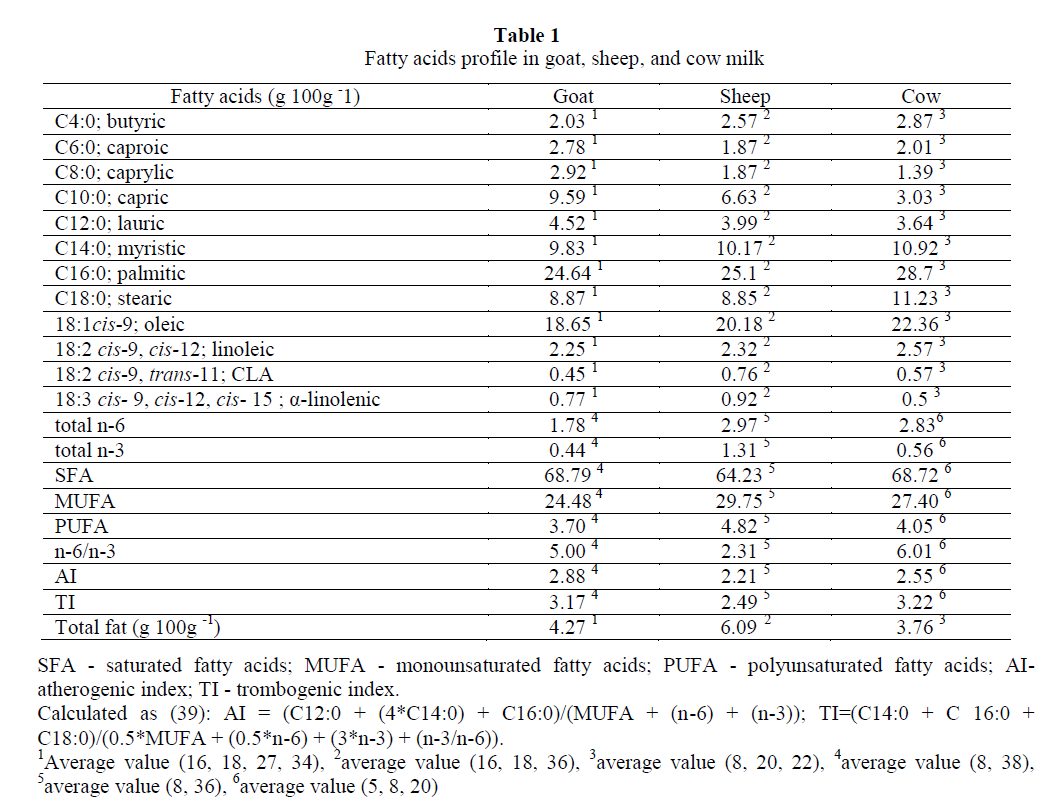
See here: https://www.researchgate.net/publication/259495733_Fatty_Acid_Profile_of_Milk_-_A_Review

If you look at that table, all those CX:0 are saturated fats. The C16:0 is the ā€œevilā€ saturated fat that supposedly raises LDL, while C16:0 supposedly lowers LDL (or is neutral). then there are C8:0, C10:0, and C12:0, which are the MCT oils. You drink a cup of cow milk, what happens to your LDL?

And note there there are no odd-chain saturated fats, like C15:0. There’s a body of evidence saying that high C15:0 is good, like this one:

And in this study, C15:0 lowers LDL.

https://www.sciencedirect.com/science/article/pii/S0002916523662859

All of this is a long way to say that the ā€œsaturated fat = raised LDLā€ has too many holes in it to be correct.


(Hugh Walter Jennings) #14

Thanks for that info/link. I’ll dive into it next day or two.

I’m not scared of saturated fat but until I know more I’m going to tweak my diet and limit saturated fat to less than 10 g of day for now. Which means a whole lot less peanut butter !

I’m not giving up my eggs, EVOO, avacado oil, or fatty fish though.

I’m going to focus on reducing inflammation with anti-inflammatory foods and supplements. I’m also looking for ways to reduce stress. Probably going to have to find another job. My current one is very stressful. And I’m the only one there that doesn’t smoke.

All I found online as far as I can do myself is
-avoid emotional stress
-avoid second hand smoke
-avoid lifting over 30 lb
-avoid straining
-avoid any high impact activity
-avoid high inflammatory foods

Red meat is one of the things on the list to avoid, so I suppose I’ll give up my grass-fed/finished ground beef. Saturated fat aside it’s on the inflammatory foods list.

We’ll see


(Edith) #15

Yes, we all had to learn that lesson over time, but that’s what made us the wise, old-timers that we are. :laughing:


(Edith) #16

Yeah, I’m not so sure that red meat, especially if it is unprocessed, is actually an inflammatory food. It has been so maligned and it is always lumped together with processed meats, I’m not sure that can be believed. What I find interesting, is if you look at the list of what is considered high inflammatory foods, every single item on that list is processed. Beef is the only item on that list which is a whole food. If one is not eating it with the bun and french fries, is it really bad? But having a dilation of the ascending aorta sounds scary and you need to do what helps put your mind at ease.

I was curious as to what kinds are food are considered anti inflammatory. Nuts, legumes, tomatoes, whole grains are on the list for low inflammatory foods. I have a hard time eating any of those, they actually give me inflammation. We are all different. You need to figure out what works for you. It is possible to eat a keto Mediterranean diet.


(KM) #17

Yes. Categorizations like, ā€œthings like sugar, processed food, and meatā€. And meat? Might as well say sugar, processed food, and marigolds, for all they have in common. I also noticed the term ā€œwhole grainā€ thrown into every. single. popular. article about healthy eating. They just can’t leave it out, ever, it’s like ā€˜whole’ and ā€˜holy’ are synonymous in the public mind.


(Joey) #18

Marketing is truth. :roll_eyes:


(Hugh Walter Jennings) #19

Chronic inflammation is related to diabetes, cancer, and heart disease.

So for my situation I’m thinking it would be wise for me to stick with fish, poultry, and eggs.

I think I’ll look into Neu5Gc a bit further.


(B Creighton) #20

Hi Hugh.
I am going to say something that is probably going to be unpopular here, but it is the truth. There is actually science to back up red meat being inflammatory… but not all red meat is the same. Let me explain. The endothelial cells which line the artery interior cover themselves in a mix of ā€œslickā€ molecules which is supposed to help the blood slip by. Among those are N-acetylneuraminic acid (Neu5Ac), which is a major component of these molecules called the glycocalyx. The issue is that most red meat has a different molecule called Neu5GC, which our bodies recognize as foreign, so we make antibodies to it even though it is getting incorporated into the glycocalyx right next to the blood. For this reason I have started to eat mostly lamb which is low in Neu5GC compared to cattle and bison. Venison and rabbit are also low - rabbit basically has none. I do eat grass-fed ground beef and the occasional steak once or twice a month - and more occassionally beef liver.

Until we find out all the reasons oxLDL particles end up getting embedded in plaques, I just feel more comfortable making my weekly red meat lamb… and the other positive is that I can get it cheaper than standard red meat at Costco or Sam’s. They import theirs, and it is most likely grass fed too. I can see it in the cooked fat. It is different than cafo beef.

I ate wild Alaskan salmon last night… It was delicious and no Neu5GC… not in chickens or their eggs either, which are some of my other major protein sources. Real fermented cheeses are OK though because the acidity of the fermentation process from the bacteria breaks down the Neu5GC, so although it is high in goat milk, it is lower in my goat yogurt…However, I avoid A1 dairy, in favor of sheep, goat, or A2 Jersey or Gurnsey cows. Just wanted to give you some food for thought.