
I know that I subtract fiber from the total carbs to find the net carbs. What I don’t understand is if I should be staying under 20% in everything I eat or if I am staying under 20 total net carbs. I know this sounds so basic, but I have searched everywhere and all people talk about are percentages, not how to track for a day. Help this serious newbie. I am starting off tomorrow. Thanks!
How to count carbs
rustyk61
(*Rusty* Instagram: @Rustyk61)
#2
rustyk61
(*Rusty* Instagram: @Rustyk61)
#5
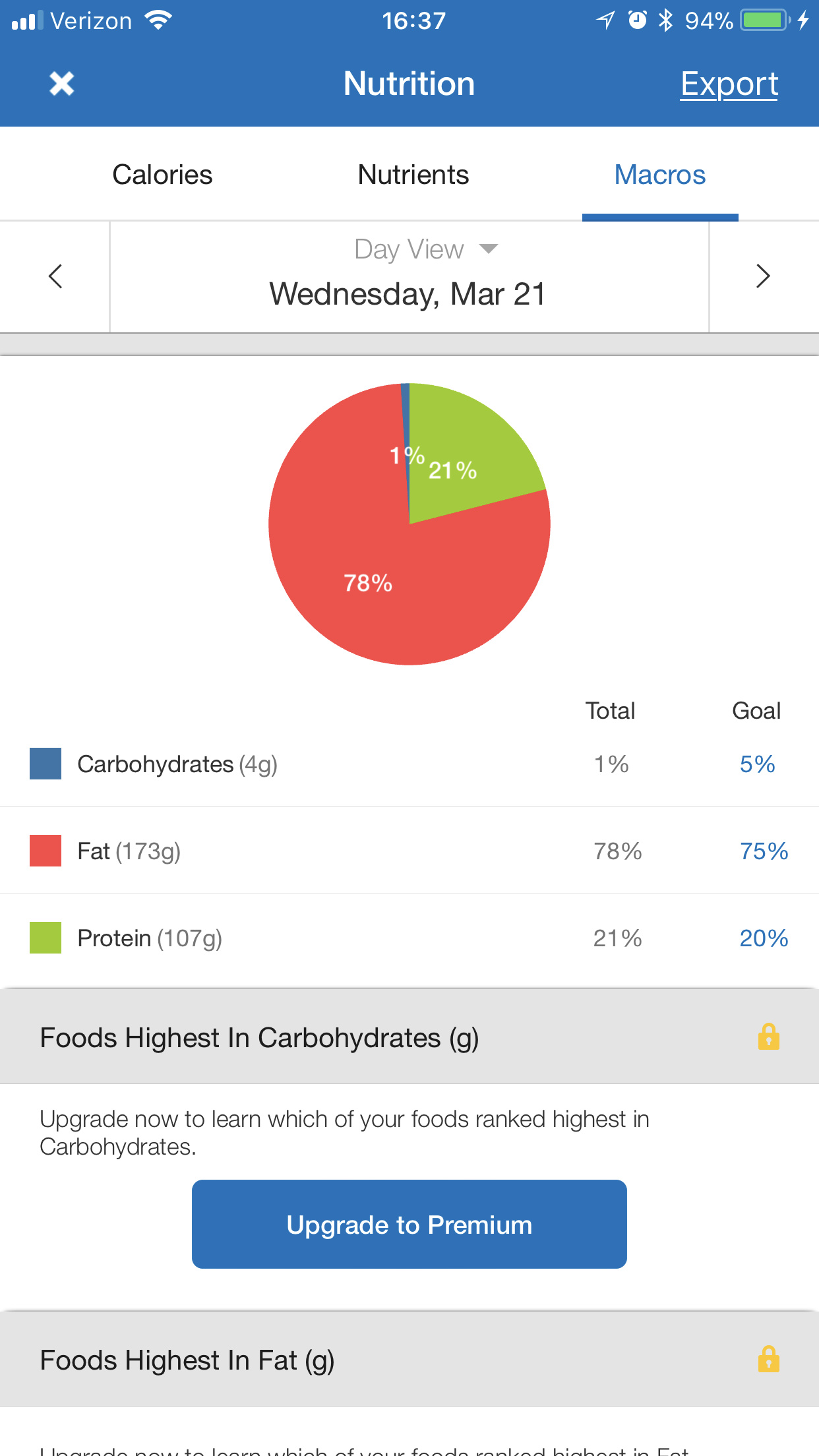
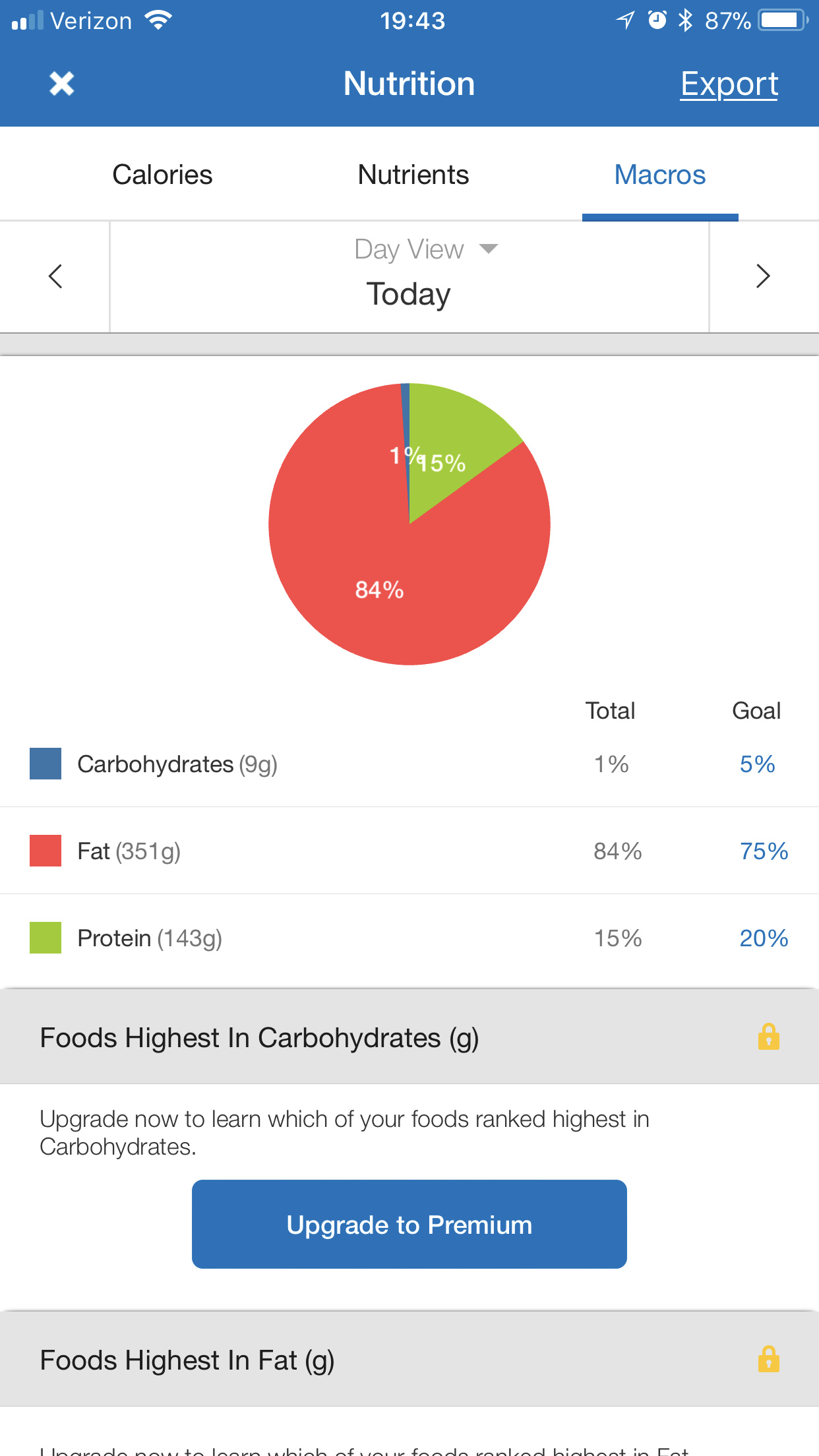
To give you a bit more info…while planning my dinner, I noticed that I was going to go over on protein, so I drastically upped my fat! Probably not the best way to do it. I should have only had a piece of that 10oz ribeye.
Capnbob
(Rob)
#6
I don’t mean to question this since you’re clearly succeeding in keto but this example seems a little out there. I believe you OMAD but this is 3800 calories. Is this your normal target or is this a ‘feast’ before a fast?
I don’t believe in CICO but this seems like at best a waste of some ribeye that your body will ignore nutritionally and at worst some sort of brake on weightloss? Or is this what is working for you? If so, this is interesting in itself.
Either way, I don’t think the message should be to hit specific macro % regardless of satiety, but if this works for rusty or you, then have at it…
rustyk61
(*Rusty* Instagram: @Rustyk61)
#7
It’s actually a fuckup. I didn’t mean to eat this much today but I was hungry earlier today and had 6oz of bacon and 4 eggs. And to keep in the spirit of another thread that you and I have commented on. I’m counting the bacon juice that I’ve cooked everything in. I need to back off a bit, but like you, I don’t follow that BS of CICO. Did any of that make sense? I know it’s probably not the best but at least I’m not eating sugar!
Freak
#8
For keto 101. Eat under 20 grams of carbs per day for the first 6 weeks. By then you will be fat adapted plus you will have done research to help you. Don’t worry about macros, calories, fat, protein grams. Just eat until your satisfied. But stay under 20 grams of carbs per day. Easy peasy.
Capnbob
(Rob)
#9
That makes sense… I seem to be hitting a bit of a stall after almost 60 months and 50lbs down so I am thinking about what kind of shake up I am going to do.
In all my efforts so far, I have not done the “up the fat” to absolute levels above what I’ve averaged. My macros are consistently good % wise but I suspect always a little at a caloric deficit (about 1800 kcal) so I’m getting ready to do a bit of a fat binge and see what happens.
Bacon is on sale near me so the omens are good!
rustyk61
(*Rusty* Instagram: @Rustyk61)
#10
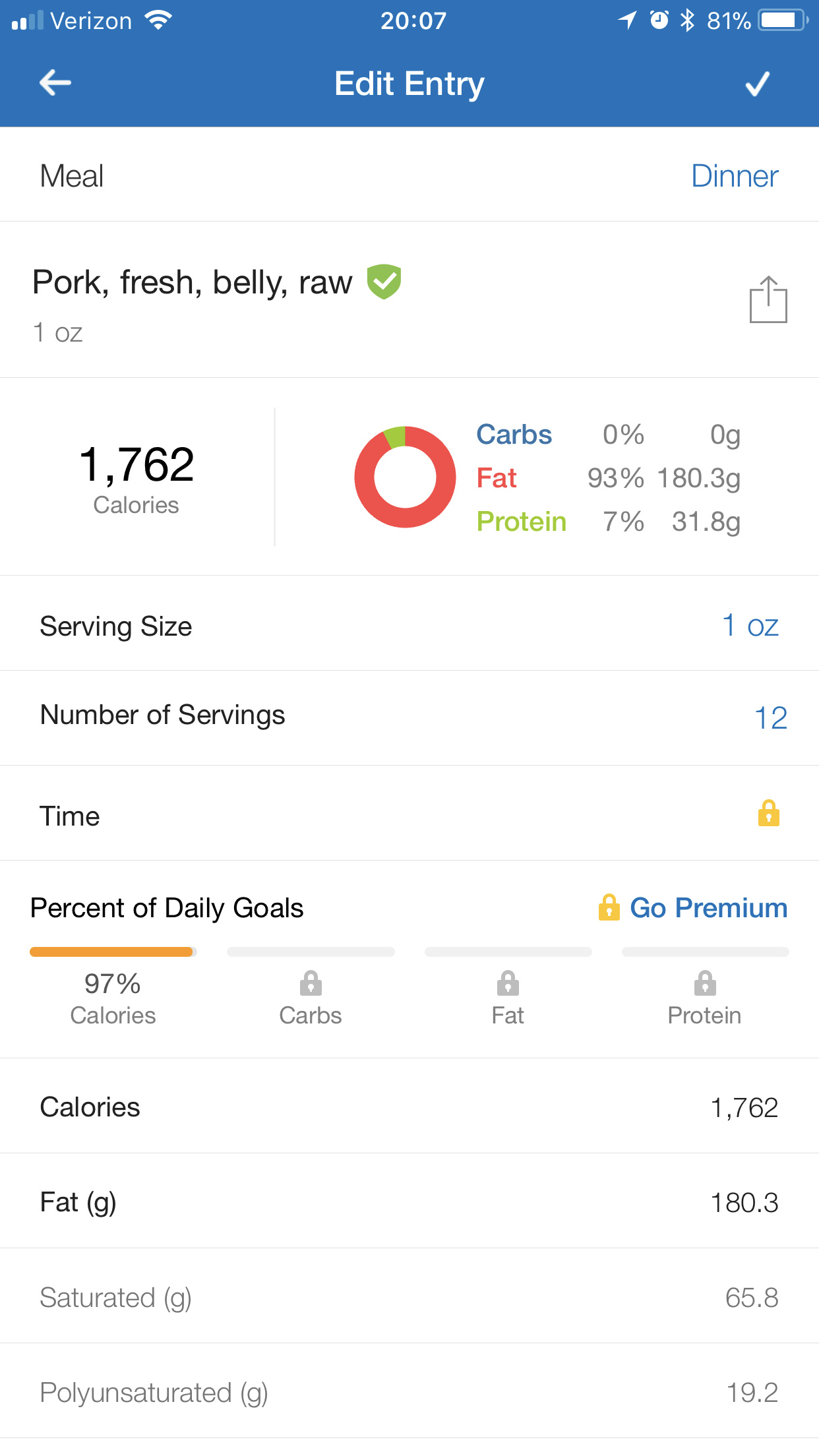
@Capnbob does this seem right for pork belly? When I bought it, I cut it up and took the total raw weight devided by the number of pieces I ended up with. Worked out to be 4oz each. I just ate 3 pieces cooked and it sure didn’t feel like 12oz. Seemed more like 4 or 6oz’s.
Capnbob
(Rob)
#11
As, you mentioned, this is like the bacon conundrum… On my app (LoseIt), the verified raw pork belly is an identical level of macros but for reference, Trader Joes sells a pre-cooked pork belly that has 56% of the calories suggesting that cooking renders out 45% of the fat calories, which is about the same as I see for belly bacon.
I would count the cooked value (using the TJ’s values) unless you are drinking the nectar since if it is in the pan, it is not in you belly 
rustyk61
(*Rusty* Instagram: @Rustyk61)
#12
Well, given that, my calories are not near what is indicated in MFP. This whole thing is making me mind numb.
Capnbob
(Rob)
#13
Given the calorie level, that may be a good thing. The worst thing about it is that you may have tainted information that may lead to inaccurate theoretical conclusions BUT you can’t knock what is working… it may be that that is a little different that you thought?
Also, pork products are a little easier to estimate I find than say ribeye since very fatty pork products are the norm. I cannot believe how fatty US commercial belly bacon is compared to euro back bacon - not that I’m complaining - but the data seems more intuitively believable. For beef ribeye, most of the data seems to be from some pretty boringly lean steaks (i.e. not vastly different from leaner cuts) which I suspect is from people testing leaner samples, not wanting to show what a fattier version would consist of. That makes me look for a version with about the right proportions of fat based on a visual inspection. If I can’t find one in the database, I take the best I can find and then add an appropriate level of tallow to get a better estimate.