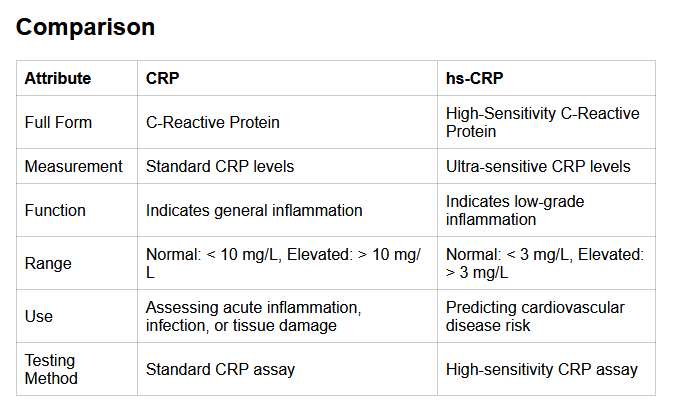
One note: you should get HS-CRP done, and NOT CRP, because the latter does go low enough for most keto folks. For instance, my previous HS-CRP was around 0.2, but I accidentally got CRP last time, which just said “<3”, because it doesn’t go low enough.
Of course, with all of these, they don’t make complete sense. Here’s one paragraph:
I have high LDL, high ApoB, very, very high Lp(a), yet quite low HS-CRP. What does that mean?
I do check hsCRP, but sedimentation rate would be a better move for that use, since it’s over a longer period of time. hsCRP is all over the place depending on a laundry list of things that can screw with acute inflammation. But measuring chronic inflammation is more telling in that use case.
You should look into Cardarine. People can pretend it causes cancer all they want despite that being debunked, it’s very good at doing it’s job.
My cholesterol has remained more or less like the end result since then. I’m doing another NMR soon to see if the breakdown has changed, but the main ones haven’t since then.
The problem with CRP is that it measures inflammation… anywhere in the body. It has nothing to say about where the inflammation is or what is causing it. A high CRP can be caused by all sorts of things, and it goes up and down a lot.
Alec, there are two versions: CRP and HS-CRP. See this for instance:
You have to get the HS-CRP. My test in 2024 was 0.26 for HS-CRP, which is quite low, but I made the mistake of getting CRP this year and got “<3.0”, meaning it was useless.
Also, these can be “noisy”. If you go run 6 miles (say 12 km) and get your HS-CRP taken the next day, it will be higher than if you got it taken a week later.
I dispute that hs-CRP “predicts” CVD. It can do no such thing. It is still just measuring any inflammation, and could be from anywhere in the body and could be from anything.
BUT… if we are saying that a low hs-CRP level discounts current heart disease process, I would buy that. CVD is driven by inflammation, and therefore if your inflammation is very low, I think it is very unlikely you have current heart disease processes going on.
I’d just say it means your cholesterol numbers are bad, you’re just not inflamed because it if. Nothing in isolation matters, there always needs to be a context. A chain smoker can have good labs, and even good lung function, doesn’t mean they’re not begging for death, it’s just not showing yet.
My mother has had 4 strokes and an aneurysm, they don’t know why. She’s taken some damage, but as a whole still pretty good surprisingly. Her lab work (that they do) would have you believe that she’s incredibly healthy, probably in great shape, etc. Things in isolation simply don’t matter, with the exception of something like a 0 pulse rate, pretty sure that ones kinda important.
@CFLBob I think what happened is they came out with CRP then determined that people (many of us) had CRP lower than that, and modified the test so that the lower limit that could be tested was lower.
@Alecmcq I agree with you. It’s just that there’s such an overwhelming reliance on markers like LDL to “predict” heart disease. So many people believe LDL is causal. For my previous cardiologist, he refused to allow me to get a CAC scan because my LDL was “low” (below 100). He was convinced that you needed a “high” LDL to have atherosclerosis. I found a lab that would give a scan even without a doctor’s orders. I got a score of zero.
I just had a CAC scan done after another 7 years (and getting 7 years older, obviously), and I got a score of 39. My current cardiologist wants me on a statin for that reason and because my LDL is now >100. He thinks it should be below 70.
But I have extremely high Lp(a), which is genetic. There’s no way to reduce it. I had my first CAC scan when I was 55, and 90% of people that age had higher scores.
He made the remark that it’s level of LDL/Lp(a) over time that’s the problem. But I had 55 YEARS of Lp(a) being in the top 2-5 %. I told him that was illogical. If high Lp(a) is “causal” for 55 years, why all the sudden do I now have some calcification? Does not compute.
Furthermore, 9 out of 10 people when I was 55 had higher scores. I guarantee there was someone out there with a similar LDL and Lp(a) to me, yet with higher CAC scores. Why?
He countered with the fact that 30 year olds don’t get heart disease. I agree, but why? It’s not LDL, because 30 years of LDL SHOULD give them heart disease, if LDL is “causal”. Because they don’t get heart disease, this means that something is protecting them. What?
He said that I was getting older. That’s true. Maybe my mitochondria or other elements of my vascular system are getting worse? But that means those elements of my vascular system CAUSE the atherosclerosis, and NOT LDL or Lp(a). Or at least that’s what makes sense to me. And if you want to treat something, find out what that is and treat that. Don’t throw drugs at lowering a marker that isn’t causal. (Separate issue – could LDL and/or LP(a) be an “accelerant”, such that once you get atherosclerosis, it accelerates the process?)
As to the markers/probability/predictions for heart disease, most are garbage. But it would be nice to get something that’s at least plausible.
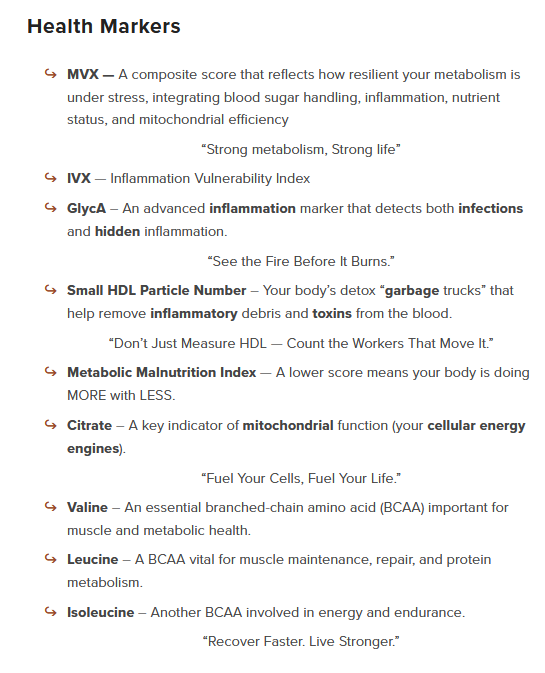
This seems to be a reasonable one, as it has a bunch of markers related to insulin resistance and inflammation:
Nick Norwitz has a substack on this, where of course you can only read part of it.
I can’t find how to get this test taken, though. It appears you have to buy it through someone who interprets it. So, a $40 test goes to $1,000.
@lfod14 I have two mores units to donate 7 gallons. That’s about 9 years and 4 months if you give as much as you can and never miss a donation (6 times per year, about 2 months between donations).
Edit: and I don’t know when they started taking track of this. I gave a lot when I was in Arizona, but I’m not sure they have that.
YUP! They love giving their gallon awards! Once I hit the gallon/year that’s when the emails and phonecalls when to stupid mode. What’s funny is since when the hell do they use gallons for blood? NEVER! Reminds me of the crappy apps that use “Streaks” to try to keep you motivated.
I read scam! They don’t have any magical tests that other labs don’t. If I were going to do tests that were really going to tell me something (I feel I already do!) I’d go with one of Dave Aspreys panels, and even then, they’re not doing anything we can’t already do, it’s just curated panels.
Interesting… I have similar, yet different, stories. My LDL level has been sky high all my life (think 450 in US units and 10 in UK units). I had a scan done 2 years ago, and the result was a 10, which was interpreted as “very low risk of a CVD event in the next 5 years”. I was very comfortable with that result: it confirmed the conclusion that I had come to from a lifetime of research that high LDL does not in itself cause CVD. In my case it has not (similar to your story).
Move forward to now… I am in another round of doctor engagement. I had an ECG recently, and the result stated that I had “a non-specific intraventricular delay with 1st degree AV block”. The words concerned me a bit, so I looked them up on Chatgpt so see what it thought. With a bit of chat and explanation it decided my result was totally benign, in fact it was to be expected in “a highly trained endurance athlete with high vagus tone”. The more I explained about who I am and what I do, it confirmed again and again that this result was normal.
My GP wanted me to see a cardiologist with this result, so I did and he dismissed the result in one sentence: totally normal, don’t worry about it. But he was extremely concerned with my sky high LDL, and wanted me immediately on statins and PCSK9s. As usual I said no, and explained my previous scan result. Not good enough for him. But we agreed in the discussion that I should get a particle subfraction analysis done, a full CT coronary angiogram, and an FH gene test.
The blood tests are currently in the process of being analysed, and I have the scan booked in for 3 weeks time… I have to go to Canberra to get it done as nobody local does it. I look forward to the results. I have no doubt that they will all want me on statins and PCSK9s again, and I will say no again. But I am keen to see whether things have changed much as a committed carnivore who eats piles of saturated fat every day.
I am pleased to report my latest CRP result was 3. Nice and low, and I think discounting a current heart disease process. CT angiogram scheduled for 2 weeks time.
Cheers
Alec