Pasture raised eggs and polyunsaturated fatty acids (PUFAs)


(Bob M) #1

I heard about chickens that were pasture-raised but fed corn and soy so they had high PUFAs. See this, for instance:

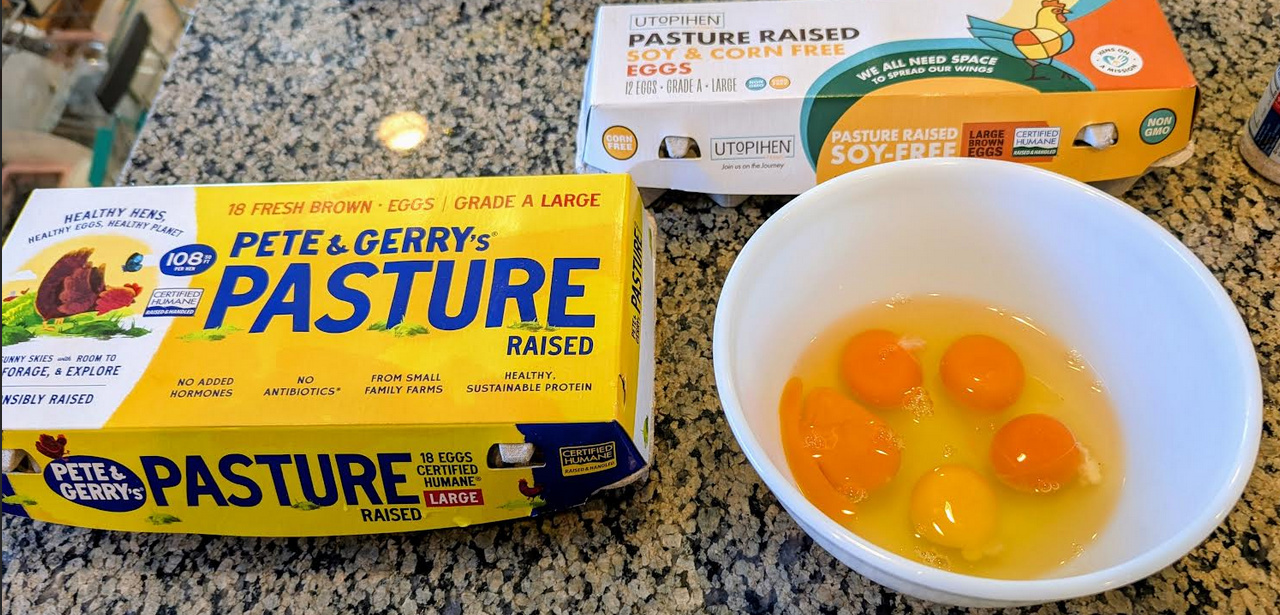
I decided to try corn- and soy-free eggs. This is a picture I took, 4 eggs from corn/soy free, and 1 egg from Pete & Gerry’s eggs:

I have no idea what the nutrition or PUFAs are for these eggs, but the corn/soy free versions look better.

The bad news is that the corn/soy free versions are insanely expensive. Like $10/dozen. I just wanted to try them. I don’t eat many eggs, but even at my low intake, that’s pretty high.


(Doug) #2

My wife gets the free-range chicken eggs, and yes, they are dear in price. Main thing I notice is the darker color of the yolks.

For taste, though, I don’t get much difference, if any.


#3

Ya, the P&G is actually a good color (compared to “normal” ones) until the Soy and Corn free ones are next to it!

I eat a lot of eggs, I bought Happy Eggs for a while $$$$$$, now I just grab a 18 pack from a Stew/Tom Leonards which is sourced pretty locally, they have a much more orange color than the mainstream eggs, the farms are smaller so less likely to have ultra-mega poultry houses feeding them industrial garbage, and rather than obsessing about lab breakdowns of PUFA’s or nutrients, I look at what matters, my lab work I’m doing anyway.

My hsCRP is always good, my Sedimentation rate is good, I do Omega / Fatty Acid Profiles now and then. Everything looks good. I supplement well, so I don’t worry about it. I feel like it’s the Ketone trap, I was obsessed with them for years, and it never even mattered, only that they were there.


(Bob M) #4

@OldDoug Yeah, I’d bet I wouldn’t be able to tell the difference, though it might be interesting to try a taste test. May have to do that in the future.

I don’t eat many eggs, and this dozen sat in my fridge for about a month before I ate them. While I love eggs, it takes time to cook a nice omelet or fry eggs, and it’s often faster for me to make all my lunches (say, from a roast beast) on the weekend.

@lfod14 At one time, I was way anti-PUFA, even not eating nuts or fried foods or different meats to avoid PUFAs. Now, I eat some nuts, still avoid most fried foods, but am a lot less strict on intake. On the other hand, I’m about to go buy some fancy pork from a local farmer at a store, because I find the fat is so much better than pigs fed corn/soy. I also found local chickens that are less corn/soy are much better than the corn/soy-based chickens from the major vendors.

The last few times I got O3/O6 ratios done, mine were terrible. And that was back when I was avoiding PUFAs and trying to get near zero intake. What I thought was happening was that my O6 might have been low, but my O3 was lower. That’s possibly because I don’t like fish, and I can’t afford the grass-fed meats that have higher O3.

I’m trying to eat more fish now, by making a fish “salad” of canned fish with mayo, onions, nuts, mustard, hot sauce, salt, pepper, olives, etc.

I do think that we’re still overwhelmed with O6. For instance, if I want to get olives from the local store, they are often in high-PUFA oils. Sunflower oil is everywhere.

#5

Colors don’t really mean much, very low-quality eggs can be dark too if they get fed something that results in a deeper color as far as I know. I focus on the taste! :smiley: Very rarely, for reasons, I even buy normal pasta for my carbiest days but I will make my own from now on (or use my crumbles, much eggier as I fry it and take it apart, don’t need to be a hard dough) as the last one (the eggiest kind one can buy here) were TASTELESS. A tasteless eggy pasta must have made from completely tasteless eggs. And I know I can’t expect a great taste from the cheapest eggs but still, it was unusually tasteless. I had way eggier tasting 4-egg pasta and it was 8-egg pasta! (number of eggs per 100g flour).

Sorry for the very much non-keto talk. Maybe I should just use pancake stripes as many people… A bother but making pasta is even more so and I very rarely eat pasta but I do like it (if it’s tasty and very eggy, of course). My pancake is carnivore.

Not as much as here. Here, sunflower oil is the number one cooking oil since decades and yeah, there is rapeseed oil sometimes but it’s almost always sunflower oil. Raisins has sunflower oil (WHY? to make it shiny? because it does absolute nothing against clumping up). Pork rinds has sunflower oil (I never will get over that). Tinned fish has sunflower and rapeseed oil (usually. tuna may get a better treatment). And normal people cook with sunflower oil (or lard but if it’s oil, it’s sunflower oil).
Once I tried to guess/calculate it and realized I probably ate 1 tonne sunflower oil in my life and I stopped eating it at 35 years old!
I still eat much omega6 but at least that’s pork and the like and it’s not the level of a sunflower oil eater.
I buy good eggs, I don’t know the details but they are very tasty and not made in a factory, it’s what I can do. And only a bit pricier than the cheap, not good tasting ones. Even the code 2 ones (1: caged, 3: fancy whatever, maybe that is the free-range, 2 is in-between) can be tasteless, I don’t buy from that place since I experienced that but the ones from the egg lady are always good. And her rabbits too! :slight_smile: The rabbits are way cheaper than supermarket ones so we eat them regularly.

(Central Florida Bob ) #6

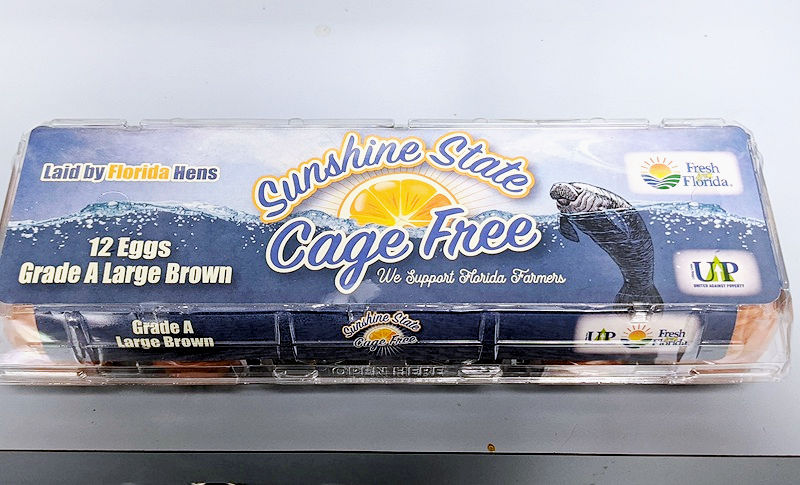
I typically use the local grocery store’s brand eggs, which are from a place that supplies “cage free” eggs around the state. Because of the package, we refer to them as Manatee eggs.

A roundabout way of getting to your picture of the eggs in a bowl. We bought another brand egg that produced the darker (bolder?) color of the other four in your bowl while the manatee eggs look like the lighter one of. (Those of you from the rest of the world may not know manatees are mammals and give live birth like dogs, cats and other mammals.)

Because I make my own mayonnaise and Caesar dressing, which is basically the same recipe with some extra flavorings added, I notice that color the most. The mayo gets a definite orange tint, I just don’t know if I’m getting anything else. Positive or negative. I don’t taste anything noticeable, but I’ve never fried one of each and eaten them side by side.

I’m under the impression that the more vivid orange comes from something in the chickens’ feed, that they feed them specifically because some people think it makes the eggs better.


(B Creighton) #7

Unfortunately, most egg chickens are going to be fed GMO corn and soy unless they are organic or pure pasture raised - which just doesn’t happen anymore. I typically buy pasture raised with the idea that at least I may get a little better vitamin K2 level that way. If I find them on sale, I will get the organic pasture raised. The pasture raised are around $6 at Trader Joe’s. The cheapest pasture raised I have found I have gotten at Sam’s Club, unless I find them on sale elsewhere. These days I am actually more concerned with the glyphosate residues and vitamin K2 level than the omega 6 levels. I do not believe omega 6 fats are bad unless they are oxidized - as long as your omega 3 levels are high enough, tests show you will live longer with adequate omega 6s. I ate 12 eggs/wk all winter and my omega 6 - omega 3 ratio was about 3.3. As a matter of fact I came in slightly below “normal” omega 6 levels this Feb. So, I think I’m fine with the omega 6 levels in my eggs, but yes there is a difference in egg quality you are hitting on… even if you don’t “feel” it… People don’t “feel” heart disease either until they have that stroke or heart attack.


(Bob M) #8

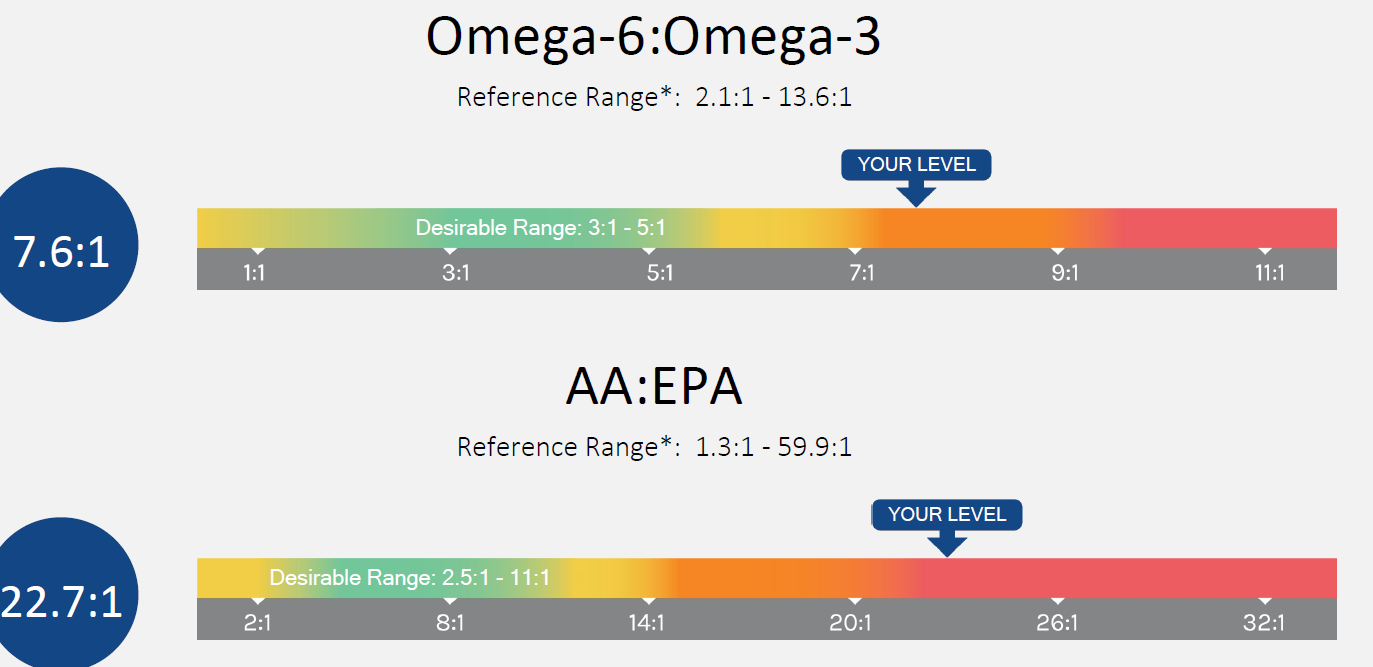
My O6/O3 ratio has been bad for a while. This was from the end of 2020:

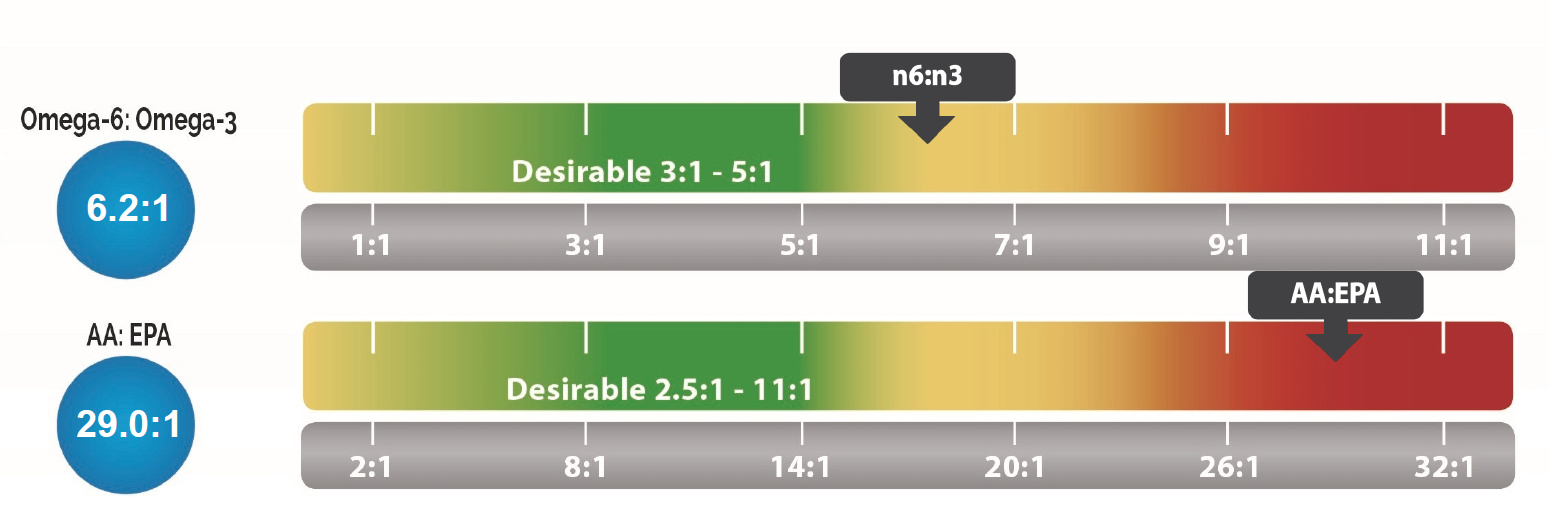
This was from about 2 years later, where the ratio got worse:

When I got these, I assumed it was because I did not eat fish. Chicken and pork contain a lot of O6, and while the beef I buy is probably a lot lower in O6, it’s not as high in O3 as the grass-fed kind. But I can’t afford that, and it’s gotten worse now.

I’d like to get a lower ratio. I’m not sure whether eggs would help with that, since I don’t eat many of them. I’m assuming my best bet is more fish.


(John) #9

While the grain-fed beef might be higher in O6 than grass-fed, I wonder if it’s still a better nutritional profile than pork and chicken.

I do eat quite a bit of egg and found a local supplier who feeds their hens no corn or soy and 80 to 85% pasture and bugs. The other 15-20% is veggie scraps from local farmers, kelp, alfalfa sprouts and Marigold flowers. But I also wonder if with the small quantity of eggs you eat, it would really move the needle at all on your fatty acid ratios.

I also eat quite a bit of tinned sardine and the occasional tinned cod liver. But if you really don’t like fish, I’m not sure whether that’s an option for you. I’d think that prioritizing beef over pork and chicken might be the first thing to do.


(Bob M) #10

Oh yeah, regular beef is way better than pork or chicken. That’s because the bacteria in the rumen of cows convert PUFAs to saturated fats (I believe).

I just thing it’s a numbers “game”. If you eat a lot chicken and pork, you’ll be higher in O6. Since it’s a ratio of O6/O3, the main way to lower it is to increase the O3.

You could eat all beef and other ruminants, which would help lower O6. That’s just realistically hard to do for a family, particularly with the crazy beef prices we have in the US right now.

Buying pork from local farmers helps too, but that gets pricey also.