
I honestly don’t think that erythritol is “artificial” - it’s a sugar alcohol and there’s lots of them out in nature. I don’t know how it’s produced, but if they feed something to a plant to get it to produce the sugar alcohol, so what? What’s the difference between that and harvesting some plant that produces it via sunlight and water?
Erythritol
SomeGuy
(Joey)
#22
Agreed. That was part of what I was trying to convey … you did it better.
Cane sugar is as much a natural product as are many of the (non-synthetic) sweetener alternatives. “Alternative” sweetener makes for a more informative description than “artificial.”
Janie
(Jane)
#23
Several years ago I saw a video of a guy and a gal testing various artifical sweeteners, then testing their blood glucoe at various intervals after ingesting the sweetener.
Their results were indeede different. One would have no glucose reponse while the othere had a mild response. And vice versa. Was very interesting!
ctviggen
(Bob M)
#24
Not sure that’s valid. How do you know insulin didn’t go up, but it was counteracted by glucagon?
For instance, I did a test where I ate about 160 grams of protein in one meal:
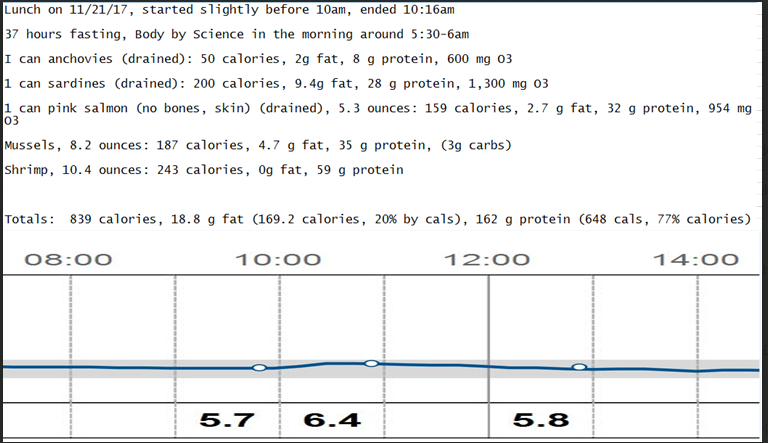
I’m pretty sure my insulin went up, but my blood sugar didn’t move. That’s because glucagon also went up.
Ben Bikman explains it here:
https://www.youtube.com/watch?v=z3fO5aTD6JU
Until we get pin-prick insulin meters, we’re not going to know what is happening because there are two “mirror image” hormones (insulin and glucagon).