Are ketones are caused (much) more by fat then lessened by protein? (Testable?)


(Bob M) #1

So, the idea appears to be that protein lowers ketones. For a long time, I have doubted this, and still doubt it now.

However, I have seen that higher fat = higher ketones. For instance, fasted yesterday until later at night. Ate a higher fat meal (ground beef + butter + cheese + cabbage), then ate some yogurt with macadamia nuts, and had a slice of high-fat chocolate semifreddo (made with 70% chocolate but replaced sugar with allulose). Got a 1.1 or 1.4 mmol/l in the morning. (Part of that is due to only eating 1 “meal”, though.)

I’ve seen this multiple times.

For ketones, I think fat leads to (much) higher ketones, but I doubt protein causes ketones to diminish that much.

My problem: Is it possible to test this theory? I can’t figure out how.

One problem: if fat goes down, ketones go down. Normally this means protein goes up (if you’re not eating carbs). (I think this is why the thought is that protein = bad for ketones.) If you keep protein the same, you can’t really go from low fat to high fat, because there’s a calorie issue that will affect this. If it’s low calorie, that alone will affect ketone values.

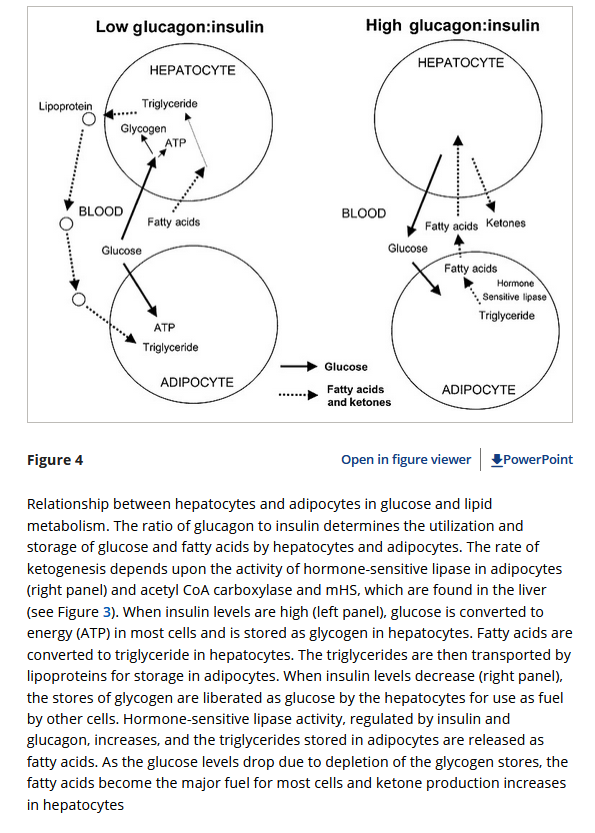
Another problem: How (blood) ketones are generated gets very complex very fast:
https://onlinelibrary.wiley.com/doi/10.1002/(SICI)1520-7560(199911/12)15:6<412::AID-DMRR72>3.0.CO;2-8

So, “higher” insulin influences the outcome, but I don’t see that that means in term of blood values or how protein affects this. And, there’s no way to get insulin/glucagon tested.

Can anyone think of a way to test that it’s mainly fat and not protein that affects ketone levels?


#2

Agreed. If you crank up fat your bodies going to try to make more fuel until it’s too much and you just get fatter, but protein actually lowering them vs not contributing to them is bringing back the old “Steak turns to cake” crap which was debunked.

I completely gave up on caring about ketones, they don’t speed up fat loss, and minus really high ketone levels, you don’t really feel any different.

Obviously there’s an exception to that for people using Keto as a medical intervention, or that want the nootropic effect of ketones, which IMO is almost impossible to sustain unless you’re taking exogenous ketones, and for that, since ketone esters became (a little) more available, they blow BHB out of the water in that dept. Or, just use an actual nootropic!


(Ohio ) #3

I eat dark chocolate but I wouldn’t make any scientific observations or diagnostics w/ it in the equation. It’s not a well understood variable in any dietary plan, let alone keto. It’s a stimulant. It’s an aphrodisiac. It’s hallucinogenic after too much (been there!). Not to mention it’s impossible to buy w/o large amounts of heavy metals. Just my 2 cents.

Same here. Since I’ve given up diary, I’ve been out of ketosis more often, but I’m so miserable that when I realize I’m out of ketosis I immediately do a meat order. Strict carnivore for a week or so, etc.


#4

Upped my Protein intake keeping fat 80% hoping when I GKI test tonight hope GKI between 1 and 2 finding that magic area where I can add weight and get good bloodwork. It seems that I’m effectively using up the protein by weight training and walking lots. Zero carbs makes a difference with me on Carnivore. When on Keto for some reason it makes things harder. Point is, I now feel adding the proteins to gain weight is happening long as I keep fats high. Being slim I don’t have the benefit of carrying the extra fat storage. So far so good.


(Bob M) #5

Well, I started out on keto eating a ton of fat, then moved to higher protein, and now I’m somewhere in between: still like lean meats like ham, but also have added back in some cheese and butter and higher fat meats sometimes. Even macadamia nuts.

What you hear everyone say is that they ate “too much protein”, and that caused their ketones to go down. I don’t think that’s true. Instead, think they ate too little fat.

But if you’re keto/carnivore, those are the only two levers you have. So, if one goes down, the other has to go up.


#6

It’s good I don’t care about ketones as I don’t really have levers. I need to keep everything as low as I comfortably can and that’s about it. My fat:protein ratio is stubbornly and almost inevitably fixed and it was even more so in the past (my original keto was fixed 65% fat, no matter what I tried without massive overeating. and I have been trying various things for a long while as they were fun and useful).
Except: fat fast days! Do you know what 2 fat fast days per weak do to ketones? I may be able to do that! I wouldn’t do it for ketones though… I would do it for the several benefits I know about regarding myself.
But my fat intake is my possible minimum on fat fast days. It’s just high in percentage. Do high ketones need many grams? And you suppose protein doesn’t matter much, that’s helpful as I need high protein, normally…
Is it individual? As I could overeat fat like crazy (300g a day seems very easy and very enjoyable, at least short term) but it wouldn’t be good for me as it’s overeating. Someone with a much higher energy need (and possibly without fat-loss plans, not like I have any result ever) can go higher - but maybe they do need to go higher for the same ketones anyway?
Whatever. More exercise is definitely the way for me as I already knew it… :slight_smile: And OMAD if I can pull it off.

Wow. Never experienced it (but I never could eat a ton anyway) - or any other effects of chocolate. It’s just joy to me. And extra fat intake. Maybe it’s individual like the effect of caffeine in tea and coffee (I never noticed any effect whatsoever).


(Bob M) #7

I’ve been having some interesting results with ketones. Since I’ve been on Jardiance, I’ve gotten higher ketones. What I realize is that there might be some benefit to higher ketones in terms of mental acuity, though I’m not sure about hunger (which many people say is true- higher ketones cause less hunger).

The problem is that very high ketones cause my mental state to go into overdrive. I’m normally a 7 out of 10 in terms of my brain thinking all the time. During my last 3 4.5-day fasts, I’ve hit very high ketones, 6-7 mmol/l, and this causes my brain to warp to 12 out of 10. I’m all over the place. Get weepy. Have a hard time concentrating.

Unfortunately, if I want to fast 4.5 day fasts, I have to work through those.

But I think the idea that protein causes lower ketones isn’t exactly correct. I’d characterize it like this:

Ketone level = X fat + Y protein.

X and Y are variables. I’d change the equals sign to a proportion symbol if I could. There’s no minus sign before Y protein because I can eat as much protein as I want and still create ketones.

But my guess is something like this:

Ketone level = 4 fat + 1 protein.

That is, fat is much more likely to raise ketones than protein is to “lower” ketones.

I cannot figure out how to test this, though, because if calories per day stay the same, then if you eat more fat, you eat less protein; if you eat more protein, you eat less fat.

And unless you have both a CGM and a continuous ketone monitor (CKM), pinprick monitors of one or both won’t tell you enough.

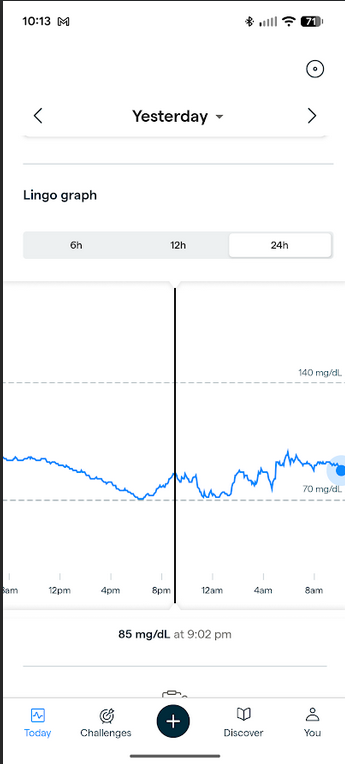
For instance, I’m wearing a Lingo CGM, and this is about the last 24 hours:

Didn’t eat at all until late last night, about 7:30 pm - 8:30 pm, then went to bed around 9 pm, up at around 5 am. The highest value was a 97 (US, about 5.4 in other units). But that curve, where it stays high in the morning and then drops precipitously until night is normal for me. I couldn’t take ketones because my Keto Mojo no longer reads the blood on the strips.

Unless I get a CGM and CKM, there’s no way to really test anything. Pinprick blood sugar wouldn’t get any of that curve, especially whatever is happening at night.

From the CKM curves I’ve seen, which radially change day-by-day, I’m not sure any pinprick testing would be useful.

But I’ve put myself on a list to get a CKM when they are sold in the US. If I can get one, I’ll revisit this again. For instance, what if I ate a ton of fat at a meal? What would I see? What if I ate a ton of protein at a meal? What would I see?


(BuckRimfire) #8

If you can organize an experiment over a few days, I would suggest Meal A being whatever you ate that night, and Meal B being the same except with half as much beef and the Calories of the omitted beef being replaced by more butter. Have Meal A on Day One, Meal B on Day Two, Meal A on Day Three and Meal B on Day Four. If you are doing OMAD and can keep your physical activities pretty consistent on Days Zero to Four, I would hope to see a pattern emerging in the morning data if the protein is impacting nutritional ketosis. (Or maybe double the meat and reduce the butter, if there is enough butter in your meal to allow that while being isocaloric.)

Or did I not understand the question?


(BuckRimfire) #9

That is a good point. Noisy data is noisy!


#10

Protein stimulates an insulin response. Could this be a factor?