It’s definitely pay-to-publish. This is easily verifiable for anybody. If you want to find “stupid stuff,” you will find it at such websites.
A Calorie Is Still A Calorie - Why Keto Does Not Work 😖
Festus
(Hagen)
#10
It’s like Forbes or Harvard Health. Used to be, these were serious and respected. It’s most surprising for Harvard Health - how are they even allowed to use that name? Harvard Medical School is still top-notch, but over the past 3 or 4 years I’ve seen stuff published under ‘Harvard Health’ that wouldn’t stand up to the most cursory examination.
charlie3
(charlie3)
#11
I suspect the body tries to use everything it gets, waste nothing (I wonder what the body does with amino acids from digestion it can’t convert to new proteins or repairs). The obvious benefit I get from low carb is appetite control. After several years eating, at any particular moment, is much less important than it used to be. These days my annual cheats can be counted on the fingers of one hand. Losing weight hasn’t been a pressing issue for a while but would be easy to do if I reduce calories for a while. What I prefer is to lose weight by eating nothing one day a week.
PaulL
(You've tried everything else; why not try bacon?)
#12
The Harvard Department of Public Health was established with money from the sugar industry, for the purposes of training researchers to work for the sugar industry. Its ties to the nutritional establishment (i.e., Ancel Keys and his friends) are legendary and numerous.
amwassil
(Michael - When reality fails to meet expectations, the problem is not reality.)
#13
We’re still missing something. We have the hormone hypothesis researchers finding significant ‘metabolic advantage’ from macronutrient sources of calories (fat vs carb) and the CICO/anti-hormone researchers finding insignificance for same. This is like Bizarro World.
Is this just due to bias or cherry-picking data because ‘the sugar industry’ funds x and the ‘Metabolic Truth Foundation’ funds y?
PaulL
(You've tried everything else; why not try bacon?)
#14
Yes.
As Taubes mentions, he got into writing about nutrition science because several of his physicist friends told him that if he thought there was a lot of bad physics going on, he should see just how much worse nutrition science was in comparison.
Taubes does also point out, however, that nutrition science is extremely difficult to do rigorously and well. The experimental subjects (human beings) live too long and are hard to control, double-blind studies are almost impossible to conduct (in almost every case), and the costs involved are astronomical. (Not to mention that studying nutrition isn’t nearly as sexy as running a cyclotron.)
Also, it doesn’t help that the field of medicine, while scientific in many ways, is basically a hierarchically-run enterprise, in which acknowledged experts are held in reverence, whereas any snotty young physicist knows that a sure path to the Nobel Prize would be to do for Einstein as Einstein did for Newton.
atomicspacebunny
(Bunny)
#15
We know there has been peer-censorship, threats against credentials, deception, corruption and hush money in the research about refined sugar but that does not mean sugar is entirely “bad?”
I wish my doctor would get up on the table throw a fit and scream at me as loud as he can “don’t eat so much of it?“ and slap me on back of the head…lol
DodgeBoys
(Art)
#16
The body doesn’t store much protein at all - a tiny bit in circulation? Excess can be used for energy, but most of the time doesn’t need to be. It can be made into fat or excreted; doesn’t high nitrogen in urine often indicate that excretion’s going on? I don’t know what else - good question.
Yeah, we are definitely usually efficient and try and use it all. I look at my stomach in the mirror and say, “Well aren’t you a bloody efficient little (big) bugger…” 
DodgeBoys
(Art)
#18
Gaah! 
 Great answer but it’s kind of enraging, isn’t it? :: pounds head against wall ::
There are things like The Nurses’ Health Study, often mentioned as the “Harvard Nurses’ Study.” In the third iteration now and with almost 300,000 women involved, valuable stuff. Associated are ‘Harvard Medical School’ and ‘Harvard T.H. Chan School of Public Health.’
So then we see “The Harvard Department of Public Health.”  Most people are going to think it’s all the same. The SUGAR INDUSTRY!
DodgeBoys
(Art)
#19
It’s like in the other thread you began - you have to have the dietary/metabolic context and a complete picture.
Well indeed. Yes, sometimes it does work like that. So, what’s the complete picture and the dietary/metabolic context there? Sometimes calories in and out is a determinant of weight. You don’t think all that’s referenced was outright faked, do you?
But it does not HAVE to be that way. Somebody from the ‘Tudor Bompa Institute’ writes something - that doesn’t mean it’s the final word, period. This is why I was talking about “pay-to-publish.” It’s not uncommon to see BS via that method.
The Tudor Bompa stuff is clearly biased and focused on cherry-picked information. They are trying to imply that it’s always that way.
Tudor Bompa is NOT saying that. If anything they are saying the exact opposite.
That also is not true. CICO doesn’t rule out hormonal effects. By definition, “calories out” can change. Nobody’s position is that energy expenditure has to remain constant.
Again, let’s look at the dietary/metabolic context and the complete picture. Let’s see what is happening, let’s see what the situation really is, to begin with.
The truth about what Tudor Bompa says is that sometimes it’s valid. The obvious point is that it’s not always so.
amwassil
(Michael - When reality fails to meet expectations, the problem is not reality.)
#20
Maybe not in your definition…
PaulL
(You've tried everything else; why not try bacon?)
#21
There is a labile pool of amino acids, but you are right; it is not very large. The body has no way to store amino acids in bulk, as it has for fatty acids. I once read an article that claimed there was some simple reaction amino acids can undergo that allows the result to be stored, but again, the quantity that could be stored was small, if I read and remember the article correctly. Nor does the body seem to “store” amino acids by turning them into lean tissue (I suppose it could in theory, but it doesn’t seem to do so in practice).
Deaminated amino acids aren’t all automatically made into fat, I don’t believe. If I recall rightly, some amino acids lend themselves to be converted more readily into glucose, while others can more easily be converted to a fatty acid, and still others can easily be converted into either. The body can handle the ammonia resulting from deamination without too much trouble, unless the quantity of amino acids to be disposed of is too large for the uric acid pathway to be able to cope. That way lies ammonia toxicity, and I believe Richard once calculated that ammonia toxicity becomes a real risk when dietary protein reaches 3 g/kg LBM or so.
amwassil
(Michael - When reality fails to meet expectations, the problem is not reality.)
#23
@LeroyJenkins Leroy, I never heard about the Tudor Bompa Institute before and know absolutely nothing about it. But I’d like to see an argument contra the OP article based on something other than ad hominem fallacy. The article actually presents the common arguments contra the insulin/hormone hypothesis which is the basis of keto. It doesn’t matter if the article is research or an opinion piece on research cited, 36 citations. It doesn’t matter if the authors are experts or not or even shills for Tudor Bompa. If the article is hogwash then it sould not be difficult to demolish it on substance. I posted it in the hopes that someone could demolish it on substance.
anon81060937
#24
Does the hormone hypothesis take into account that calories are recycled and that they’re more efficiently recycled during OMAD?
amwassil
(Michael - When reality fails to meet expectations, the problem is not reality.)
#25
You may find this of interest:
LeroyJenkins
(Leroy)
#26
It’s cherry-picking, erroneously selective, pay to publish stuff. It’s deliberately slanted and nobody here is defending it. It doesn’t need demolition, it needs a comments section. 
 I meant no disrespect on this thing - it’s just funny to see that ‘Institute’ come up multiple times. “Tudor Bompa” sounds funny in English, to me anyway, and I have visions of a couple wild-looking blokes coming and knocking on my door.
“Hello, we’re collecting money for the Tudor Bompa Institute, to support opening a portal to another dimension…” 
amwassil
(Michael - When reality fails to meet expectations, the problem is not reality.)
#27
@LeroyJenkins There’s a big difference between stating one’s opinions and citing relevant evidence in support of those opinions. As I stated previously, I’d like to see some contra evidence to discredit the OP article. I also mean no disrespect. You are entitled to your opinions, but your opinions mean nothing. Without supporting evidence/citations your opinion that the article expresses cherry picked and agenda slanted data does nothing to descredit the OP.
LeroyJenkins
(Leroy)
#28
Hey, it’s just funny, that’s all. 
You shouldn’t need it. It’s immediately evident what’s going on, i.e.
And:
And:
You should know better, that’s all. We mostly all do know better. That’s why you’re not getting the “response” here that you seem to want. Can you find something, somewhere, that’s deliberately slanted, uses cherry-picked information, is not peer-reviewed, is pretty much just ‘dumb’ and which misses the bigger, more complete picture, as on the other thread?
Well of course you can, but so what? If all the members of this forum did was post half-arsed stuff all the time, then not much at all would be achieved. We need to have better scientific understanding, to get that ‘bigger, more complete picture,’ and be able to quickly see BS for what it is. Paying attention to a smaller thing, versus the larger reality, isn’t really what we should do.
Critical thinking means being aware of what stuff like that Tudor Bompa article is. Might as well just have a laugh about it. 
amwassil
(Michael - When reality fails to meet expectations, the problem is not reality.)
#29
No, critical thinking means doing your homework to cite evidence. DodgeBoys are not evidence of anything other than DodgeBoys’ opinions.
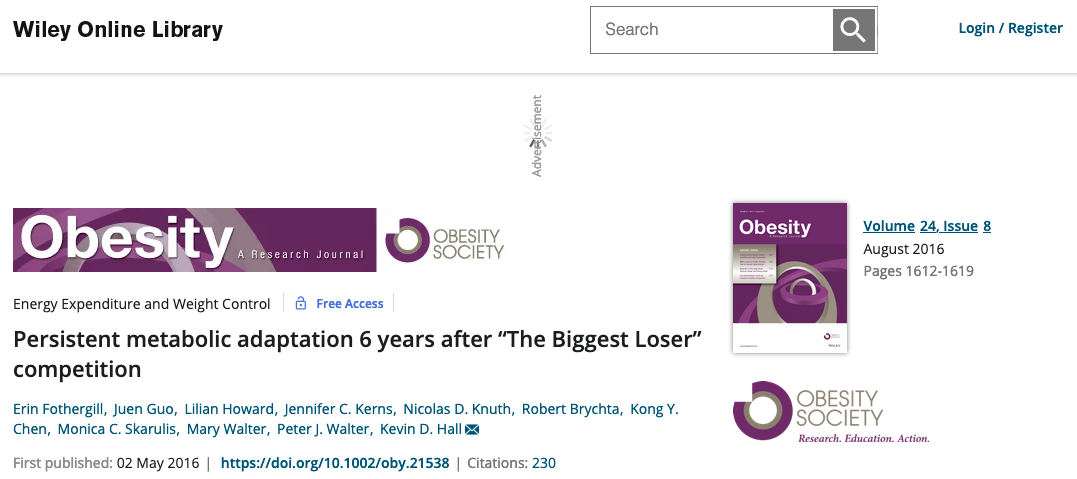
Your opinions, DodgeBoys’ opinions and my opinions count for naught. Here’s evidence: